
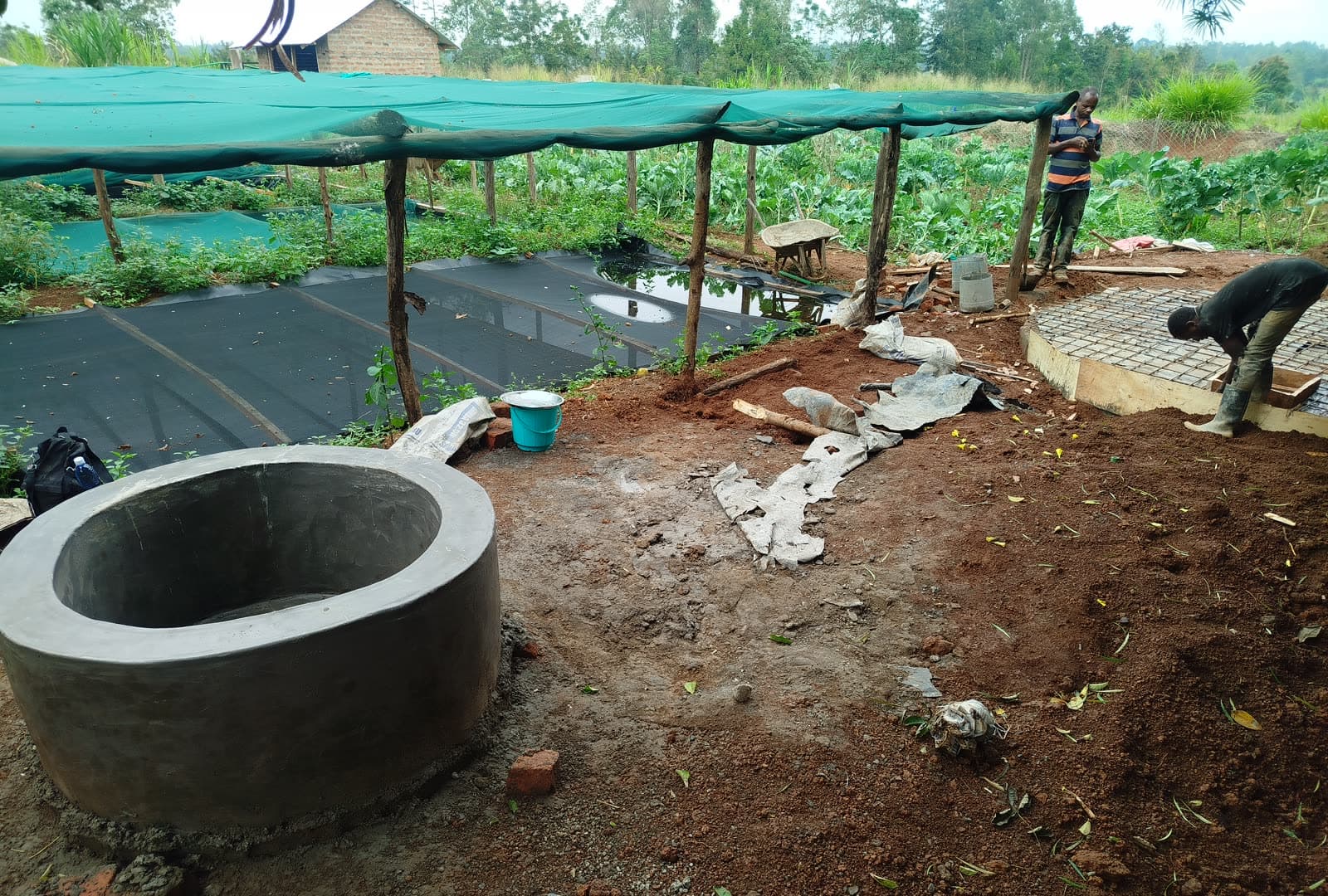
Bio-Slurry: The Fertilizer By-Product You Shouldn't Waste
Every biodigester produces two things: biogas and bio-slurry. The gas tends to get all the attention since it's what shows up on the stove, but the slurry is just as valuable to a farm that's already running a system.
Bio-slurry is simply the digested output of whatever organic waste went into the tank. It's rich in nitrogen, phosphorus, and potassium, and generally gentler on soil over time than synthetic fertilizer alone. Farmers typically apply it directly to crops or dilute it with water first, depending on the crop and soil type.
For households already running a digester for cooking gas, using the slurry instead of buying fertilizer is one of the simplest ways to get more value out of a system that's already installed. It turns what would otherwise be a waste stream into two usable outputs instead of one, which is the core of the circular model behind every installation we build: waste in, energy and fertilizer out.
We cover slurry handling and application as part of the training that comes with every installation, since getting this part right is often what makes the difference between a digester that pays for itself over time and one that's only ever used for gas.